Find your career
If you have an interest in any topic related to journalism and communications, let us help you find your career path.
Earn a degree in journalism
And turn your storytelling passion into a career.
Watch our historical documentary which explores the evolution of the Reynolds School through 100 years of challenge, change and achievement.
Watch here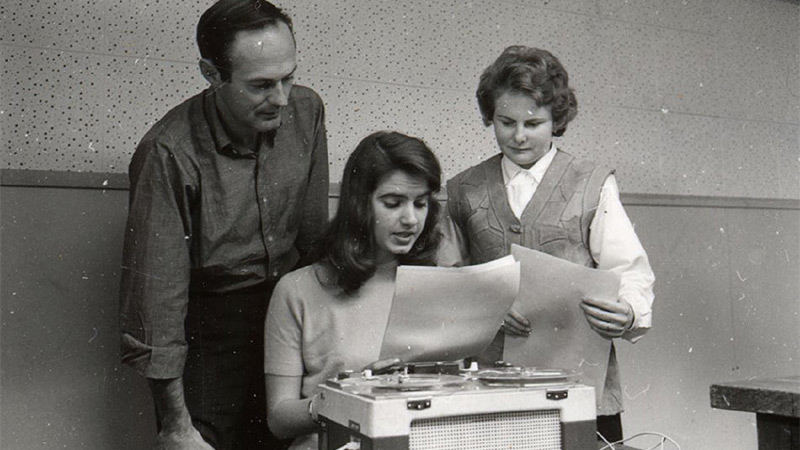
02:00 PM
Academic Lectures and Seminars
Meet NASA filmmaker James Tralie at Donald W. Reynolds School of JournalismIf you have an interest in any topic related to journalism and communications, let us help you find your career path.
Book state-of-the-art labs and studios to work on class projects, research and personal passions.
Try out your future career in our in-house production centers and through experiences with our media partners.

Alpha Design
Work with real clients to create strategy-based visual communication.
The Hitchcock Project
Communicate about science using data-visualization, graphic design and virtual reality.

KUNR
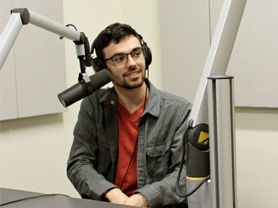
Intern for a public radio station on campus that provides NPR and regional news and podcasts.

Noticiero Móvil
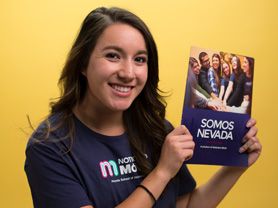
Produce Spanish and English news content for our bilingual multimedia news outlet.

NPR NextGen Nevada
Participate in a one-week, student multimedia training project co-sponsored by NPR.

Reynolds Media Lab
Test out your podcasting, web design, video and writing skills inside our production center.
Learn about recent news and happenings at the Reynolds School
Three journalism students win prestigious Hearst Awards
Students Zoe Malen, Madison Lloyd and Sophia Holm placed in the multimedia and audio categories

Journalism school hosts 59th Scripps Dinner and Lecture, honors four students with scholarships
Steven Waldman, founder and president of Rebuild Local News, was this year’s Scripps lecturer
Researchers and students gain new insights and make new connections in Panama
Student participants join researchers to support international conservation efforts
How can we best communicate science during tense times?
Journalism professor Ran Duan discusses fear, risk, and the finite pool of worry